

Alumni in Action: What a University of Minnesota Medical Laboratory Science Grad does at Medtronic

Not every student who graduates from college receives hands on experience conducting enzyme-linked immunosorbent assays (ELISAs), but as a University of Minnesota Medical Laboratory Sciences (MLS) program graduate, Hannah Jeffers did. That, along with the overall education she cultivated in the program, caught the interest of medical device maker Medtronic.

Medtronic had written to the program about an internship opportunity during Hannah’s senior year. She was quick to apply. “They were looking for someone with an MLS background who had worked with ELISA methods,” she says. “I was like ‘this sounds perfect’.  I really wanted to be somewhere that’s super hands on.”  The hiring manager replied, “OK, when can you start?”

The 2019 MLS program graduate interned at Medtronic from May to September of her senior year, prior to fulfilling the MLS program’s clinical rotation requirements at a lab and two hospitals, where she focused on microbiology, clinical chemistry, hematology and blood banking, respectively.  Following graduation, Medtronic hired Hannah full time to work in its blood laboratory.

Her role there is to draw human blood and test it against the company’s devices to see if there’s an adverse outcome, like clotting or hemolysis. She conducts her tests in a lab setting – not on people or animals – to give the company an early sense as to whether the devices are safe before they advance to animal studies or clinical trials.

“I feel very grateful that I was able to get this position,” she says. “I’m able to help people every day, even if it’s not in the typical MLS sense.”

The University of Minnesota’s MLS program equips graduates to work within myriad fields and organizations.  For example, Hannah says other classmates from the program work in states such as Oregon and Utah, in settings like microbiology and commercial laboratories.  “The MLS program is rigorous, but it prepares you so well,” she says. “A friend who graduated with me wanted to be a generalist. She was like ‘I want to do everything, I just want to help in every way that I can.’”

The program sent Hannah out to succeed within the exacting and meticulous framework and standards of a company whose mission is ‘to alleviate pain, restore health, and extend life’. “This program prepared me for anything.  I felt very prepared for the boards, and just really prepared for everything even if I didn’t come to Medtronic,” she says.

Yet soon after she ventured out, Hannah was drawn back, to contribute to the program that left a profound imprint on her professional path.  She agreed to lead a virtual clinical rotation for current MLS students who are interested in the work she conducts.     

“It makes me happy,” she said.  “I hope people were inspired.”


Hannah Jeffers, University of Minnesota MLS Class of 2019
Hannah Jeffers, University of Minnesota MLS Class of 2019

From Mfangano to Minnesota - A collaboration rooted in community

Twelve years after and eight thousand miles away from a chance encounter in Africa, two strangers-turned-colleagues and friends reunited on the University of Minnesota campus. The reunion in Minnesota marks a new chapter for the pair, positioning them to expand research and sustainable health solutions by formally launching the Mfangano Community Health Field Station @ the Ekialo Kiona (EK) Center in Kenya.

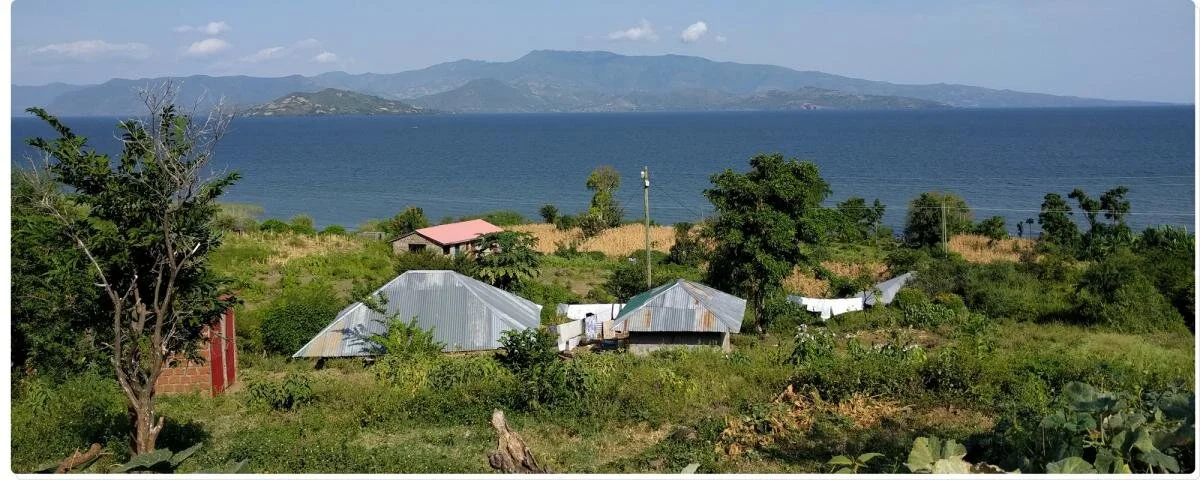
The partnership began in 2006 when Charles (Chas) Salmen, then an aspiring medical student, encountered two community leaders from Mfangano Island at a bus stop along the shores of Lake Victoria, Kenya. He accepted their invitation to visit their new organic farm on the island, located in the middle of the vast lake.

Among those Chas met on Mfangano Island was the owner of that farm, Joel Magioki Oguta, who spoke with Chas about the island’s links between the environment, the local economy, health, and the degradation of the residents’ native culture. Joel shared his vision to build a community center on Mfangano Island and, ultimately, donated the land that would become the Ekialo Kiona (EK) Center.

This resonated with Chas. With his perspective as a medical anthropologist, he appreciated how the impact of developing a community center on the island, in contrast to western health care’s focus on ”deliverables” and “return on investment”, could foundationally enhance health and wellness within a community that faced an existential threat to its people and culture. After a few weeks on the island, he “was hooked”.

Through a Rhodes Scholarship, Chas spent the next two years conducting ethnographic research on Mfangano Island. Throughout his medical studies, medical school graduation, and his residency with the University of Minnesota North Memorial Family Medicine Program, Chas and Joel continued to work with the Mfangano community to build the Ekialo Kiona (EK) Center and co-founded the Organic Health Response (OHR), an organization which supports the EK Center’s programs.

Today, the EK Center has evolved to become the driving force of the island’s public health, technology, broadcast communications, and agricultural functions, as well as a space that promotes community and the island’s indigenous culture. To date, over 5,000 members have joined the EK Club through the Cyber-VCT program, where members can discreetly receive voluntary HIV counseling and testing (VCT), overcoming the stigma and scrutiny commonly associated with HIV testing centers in rural Kenya. The Health Navigation & Emergency Response program operates the region’s first emergency boat to address the lack of emergency transportation on Mfangano Island by providing first aid, urgent transport, care coordination, and patient advocacy. Other programs thriving through the Center include the Ekialo Kiona Suba Youth Radio (EK-FM) which broadcasts programs about health, agriculture, and culture in the native Suba language; and a demonstration farm highlighting how farming can be a viable, engaging, professional occupation while also nourishing people and protecting the island ecosystem.

In partnership with the U of M’s Center for Global Health and Social Responsibility (CGHSR), Chas and Joel led the development of the Mfangano Community Health Field Station @ the Ekialo Kiona (EK) Center, an academic collaboration to advance research, training, and community health programming on the island and beyond.

In September 2018, a CGHSR Travel Award enabled Joel to travel to the US for the first time. The occasion was marked with an official launch event to introduce University and community stakeholders to the friendship and to Joel’s mentorship of Chas, which are both foundational to the Field Station’s activities. The Field Station differs from so many global projects because it is driven by the community in which it operates. For University members to connect with the Field Station it is critically important for them to understand what drives activity: the health of the people and the ecosystem of the island.

Alongside the organic nature of the Field Station, the partnership was formalized through a  University-wide affiliation agreement between OHR-Ekialo Kiona Center and the University of Minnesota. The agreement will build upon the University’s and its students’ current involvement with the people of Mfangano Island to eventually include student fellowship opportunities for research, training, and community health. These endeavors will initially focus on: health navigation for maternal and newborn health; sustainable agroforestry and nutrition; community health promotion; mass communications; and linguistics.

“During my time I was honored to meet with various professionals from sectors across agriculture, medicine, and community health,” Joel says. “Most importantly, this trip allowed us to sign the official affiliation agreement to bring this field station into existence. I appreciate the University of Minnesota for supporting me towards my goals”.

“Joel traveled thousands of miles, the longest journey of his life, and represented his community with insight and inspiration,” Chas added. “In academic seminars, research planning meetings, an official signing ceremony, and on organic CSA farm fields and dairy farms, Joel activated deep connections that I know will energize our growing collaboration for decades. It was a highlight of my career to have the opportunity to host my friend and partner here at UMN.”

Mfangano Community Health Field Station

Mfangano Community Health Field Station

Investigating How Health Navigation Improves Maternal Mortality on Mfangano Island

December 14, 2018

[From a series of writings that demonstrate the University of Minnesota’s collaboration with academic institutions abroad to promote self-sustenance and better health around the globe]

A woman is in labor and she and her baby are in distress; her midwife cannot manage the complications. The nearest neonatal and obstetric care facility is hours away. The transport across Lake Victoria to the mainland takes about an hour, if a boat is even available, then it could take another one to two hours to reach an obstetrician and an operating room, which also may not be available, in a county of one million residents.

On Mfangano Island, eight thousand miles from Minnesota, in the middle of Lake Victoria, off the coast of Kenya, a University of Minnesota medical student is working with the Island’s residents to cut that travel time and to save peoples’ lives.

In July 2018, Nick DesLauriers arrived on the island as a Doris Duke International Clinical Research Fellow. He is working with Charles (Chas) Salmen, UMN Department of Family Medicine assistant professor, on a project funded by a UMN Center for Global Health and Social Responsibility (CGHSR) seed grant. The research team is studying whether the “Health Navigator” program, through which trained community health volunteers (CHVs)—first responders—in the village, can effectively coordinate and expedite emergency care transfers to the mainland. The project uses an emergency boat, available 24-hours a day, with a captain and a nurse.

Specifically, Nick is screening and analyzing the emergency cases that occurred across the island and surrounding islands. He is measuring delays and evaluating the factors that contributed to these delays.

There are eight health facilities on Mfangano Island and an additional facility on each of its three surrounding islands. But, Nick says, they lack the resources and operating rooms necessary to treat obstetrical and neonatal emergencies, which total approximately 100 per year on the four islands.

“Morbidity and mortality are currently very high on the island from these emergencies due to the remote location and very limited access to emergency and advanced obstetric services,” Nick says. “We hope to use this information to identify program changes that can shorten delays in care during emergencies, and thus reduce maternal and neonatal mortality.''

Twelve years ago, Nick’s mentor, Dr. Chas Salmen, initiated the collaboration on Mfangano and learned that health-related progress on the islands—and in any global health case—depends on establishing relationships, trust, collaboration, and deference to the culture and customs of the local people. Nick is experiencing this first hand, through his tenure on the islands, which will continue until May 2019.

“It's been such an important stepping stone to get the chance to spend an extended period of time to invest in understanding the research process and how this process is different in a global setting,” Nick says. “As one tasked with helping coordinate the study, I have to recognize the value in the skills and knowledge I bring to the table, but also be careful to not make too broad of assumptions that are unique to my experiences and background but are not as applicable here.”

Nick’s work is part of the MOMENTUM Study (Monitoring Maternal Emergency Navigation and Triage on Mfangano), a collaborative research effort between the University of Minnesota, local partners on Mfangano, and investigators at Maseno University in Kenya and Makerere University in Uganda. He works closely under the mentorship of Dr. Salmen as well as MOMENTUM Study CO-PI, Dr. Louisa Ndunyu, Chair of Maseno University Department of Public Health. Other members of the research team include Evance Ogala, an MPH candidate at Maseno, and Dr. John Ssenkusu, a biostatistician at Makerere University.

Implementing the study is building capacity of local investigators and creating long-term research partnerships. “As for the training, the treat was all mine,” says Dr. Ndunyu, who recently returned from Mfangano where she worked with Nick to plan a training for local research staff. “It was an exciting, adventurous experience being on the Island for the very first time. I enjoyed every little bit of it and the moments shared with everyone in the team. It is a great team.”

Nick says his research on the islands expands well beyond logistics and medical considerations. Being attuned to social, economic, political, and cultural dynamics helps foster the community’s engagement, which is crucial to the project’s success.

“I've learned how important it is for research projects in international settings to have community buy-in and support, as the research project needs to be seen as something that will benefit the community. If it's not seen that way, then it should be changed,” he says.

Learn more about the Mfangano Community Health Field Station @ the Ekialo Kiona (EK) Center.